


Football is one of the most intense and physically demanding sports in the world guardian caps. From youth leagues to the professional stage, players collide at high speed on nearly every snap. With growing awareness around head injuries and long-term brain health, protective equipment has evolved rapidly. One of the most talked-about developments in recent years is guardian caps.
These soft-shell helmet covers have sparked discussion across locker rooms, coaching clinics, and sports media. Some see them as a breakthrough in player safety, while others question their effectiveness or aesthetics. Regardless of opinion, they have become a major part of modern football culture.
In this in-depth guide, you’ll learn what they are, how they work, their benefits, potential drawbacks, adoption at different levels of play, scientific insights, common myths, and what the future holds.
What Are Guardian Caps?
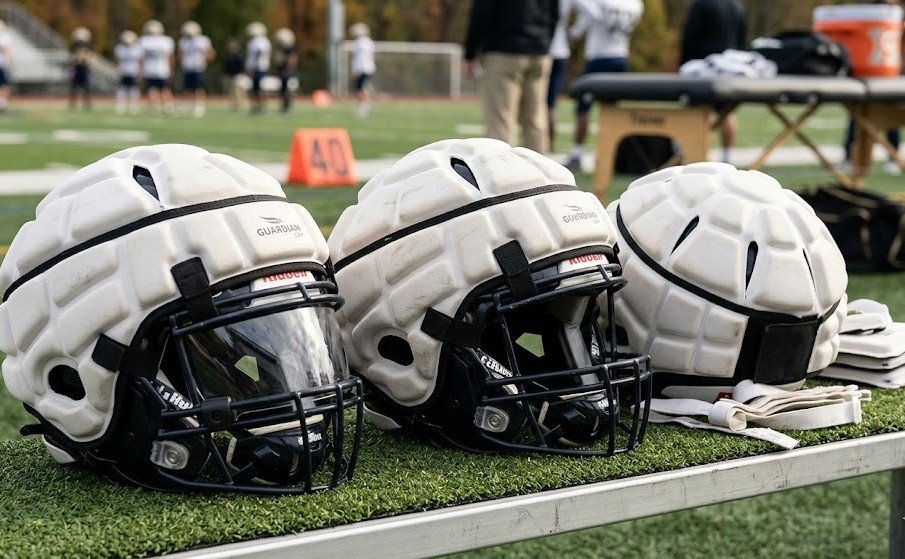
Guardian caps are padded helmet covers designed to reduce the force of impact during football collisions. They are worn over a standard football helmet and secured tightly to prevent movement during play.
Manufactured by Guardian Sports, these caps are made from a specialized foam material engineered to absorb and dissipate energy from impacts. Unlike traditional helmets, which are built to protect against catastrophic injury, this additional layer is intended to reduce the repetitive blows players experience during practice and games.
Initially introduced for practice use, they have gradually gained traction in competitive settings as well.
Why Were Guardian Caps Introduced?
Football has faced increasing scrutiny regarding concussions and repetitive head trauma. Research over the past two decades has linked repeated sub-concussive impacts to long-term neurological concerns.
Organizations such as the National Football League and the National Collegiate Athletic Association have implemented numerous safety reforms, including:
- Limiting full-contact practices
- Updating tackling techniques
- Improving helmet standards
- Expanding concussion protocols
Despite these measures, players still experience hundreds of impacts each season. The idea behind guardian caps is simple: reduce the cumulative force of those hits.
How Guardian Caps Work
To understand their function, it helps to look at the physics of impact.
When two helmets collide:
- Force transfers instantly between players.
- Energy travels through the helmet shell.
- The brain moves within the skull due to acceleration and deceleration.
A traditional helmet has padding inside, but the outer shell is hard. Guardian caps add an external layer of soft, shock-absorbing foam. This layer:
- Increases impact duration slightly
- Reduces peak force
- Absorbs some energy before it reaches the helmet shell
By spreading impact over a slightly longer period, the force transferred to the head may be reduced.
Materials and Design
Guardian caps are not simple foam covers. They are engineered for:
- Energy absorption
- Ventilation
- Lightweight comfort
- Durability under repeated impacts
Key design features include:
- Advanced closed-cell foam
- Airflow channels to prevent overheating
- Secure strap system to prevent shifting
- Compatibility with most helmet models
They are also water-resistant and built to withstand extreme weather conditions.
Adoption in Professional Football
In recent seasons, the National Football League mandated guardian caps during certain preseason practices for offensive and defensive linemen, linebackers, and tight ends — positions that experience frequent helmet-to-helmet contact.
The league later expanded usage during training camp and preseason games in specific circumstances.
This decision followed internal studies showing measurable reductions in concussions among players wearing them during practices.
Use in College and High School Football
Beyond the professional level, guardian caps have been widely adopted in:
- NCAA Division I programs
- Smaller college conferences
- High school football teams
- Youth football leagues
Many schools now require them during:
- Full-contact practices
- Spring training sessions
- Summer camps
Parents and administrators often support their use, especially in youth programs where developing brains may be more vulnerable.
Benefits of Guardian Caps
1. Reduced Impact Force
Independent lab testing suggests they may reduce impact severity during helmet-to-helmet contact.
2. Lower Concussion Rates in Practice
Early data from professional training camps indicated fewer concussions among position groups wearing them.
3. Improved Player Confidence
Some athletes report feeling safer during drills involving frequent contact.
4. Culture Shift Toward Safety
Their visibility signals a commitment to reducing injury risk.
Potential Drawbacks and Criticism
Despite widespread adoption, guardian caps are not without criticism.
1. Aesthetic Concerns
Some players dislike the bulky look.
2. Added Weight
Although lightweight, they add a small amount of extra mass to the helmet.
3. False Sense of Security
Critics worry that players might tackle more aggressively if they feel more protected.
4. Limited Long-Term Data
While early studies are promising, long-term neurological research is ongoing.
Do Guardian Caps Prevent Concussions?
This is the most common question.
No protective device can fully prevent concussions. Football involves rotational forces and complex motion that cannot be eliminated with padding alone.
However, the goal is not elimination — it is reduction of risk.
Laboratory impact tests show decreased peak force measurements, but concussions also depend on:
- Angle of impact
- Speed of collision
- Player body positioning
- Rotational acceleration
Therefore, guardian caps are best viewed as one component in a broader safety strategy.
How Players Feel About Wearing Them
Player opinions vary:
- Linemen often appreciate the added protection.
- Skill position players sometimes resist using them in games.
- Younger athletes adapt quickly.
Over time, resistance tends to decrease as the equipment becomes normalized.
Guardian Caps in Youth Football
Youth leagues have been among the strongest adopters.
Reasons include:
- Greater parental awareness
- Increased medical oversight
- Developing brain vulnerability
- Liability considerations
Many youth programs now integrate them as standard practice equipment.
The Science Behind Impact Reduction
Impact force is measured using:
- Linear acceleration (g-forces)
- Rotational acceleration
- Peak impact load
The extra padding increases the stopping distance slightly. According to physics principles, increasing stopping time reduces peak force.
Even small reductions can matter over hundreds of impacts in a season.
Comparison to Traditional Helmet Technology
Traditional helmets focus on:
- Preventing skull fractures
- Distributing force internally
- Managing high-impact collisions
Guardian caps add:
- External energy absorption
- Reduced direct shell-to-shell contact
- Additional cushioning
They complement helmet design rather than replace it.
Cost and Accessibility
Cost varies depending on quantity and level of play. Bulk purchases for schools reduce per-unit price.
For many programs, the investment is considered worthwhile compared to:
- Medical expenses
- Player downtime
- Long-term liability
Youth leagues increasingly include them in equipment budgets.
Common Myths About Guardian Caps
Myth 1: They Make Players Invincible
No equipment can eliminate injury risk.
Myth 2: They’re Only for Professionals
Youth and high school programs widely use them.
Myth 3: They Replace Proper Technique
Good tackling form remains critical.
Myth 4: They’re Just a Marketing Gimmick
Data-driven adoption by major leagues suggests serious evaluation.
The Cultural Shift in Football Safety
Football has undergone major safety reforms in recent decades:
- Rule changes on targeting
- Stricter concussion protocols
- Independent medical evaluations
- Reduced contact practices
Guardian caps represent a visible sign of that transformation.
Future Developments
The next generation of protective gear may include:
- Integrated sensor technology
- Improved rotational force reduction
- Advanced foam materials
- Smart impact tracking
Manufacturers continue refining design based on new research and player feedback.
Frequently Asked Questions
Are guardian caps required in games?
Some leagues require them during preseason or specific drills. Requirements vary by organization.
Do quarterbacks wear them?
Typically less common due to lower frequency of helmet-to-helmet contact.
Can they be used in all weather?
Yes, they are built for heat, rain, and cold conditions.
Are they allowed in official competition?
Approval depends on league regulations.
Final Thoughts
Football will always involve physical contact. Eliminating risk entirely is impossible. However, reducing unnecessary force and protecting athletes at every level is both a medical and ethical priority.
Guardian caps are not a magic solution — but they represent a meaningful step forward in player safety. Their increasing adoption across professional, collegiate, high school, and youth football reflects a broader shift toward long-term athlete health.
As research continues and technology advances, protective innovations like these may become standard equipment worldwide.
Whether you’re a coach, parent, player, or sports enthusiast, understanding guardian caps helps you stay informed about one of football’s most significant safety developments.
READ MORE : GROW MAGAZINES
